

SolidCAM Mill-Turn Machining is the complete CAM solution for advanced multi-turret and multi-spindle mill-turn CNC centres. It supports milling and turning operations across main and back spindles within a single programming environment, with no limit on the number of axes or channels. For manufacturers producing complex parts on high-end mill-turn machines, it provides a structured way to manage toolpaths, machine control operations, channel synchronisation, and full machine simulation.
SolidCAM Mill-Turn Machining is the complete CAM solution for advanced multi-turret and multi-spindle mill-turn CNC centres. It supports milling and turning operations across main and back spindles within a single programming environment, with no limit on the number of axes or channels. For manufacturers producing complex parts on high-end mill-turn machines, it provides a structured way to manage toolpaths, machine control operations, channel synchronisation, and full machine simulation.
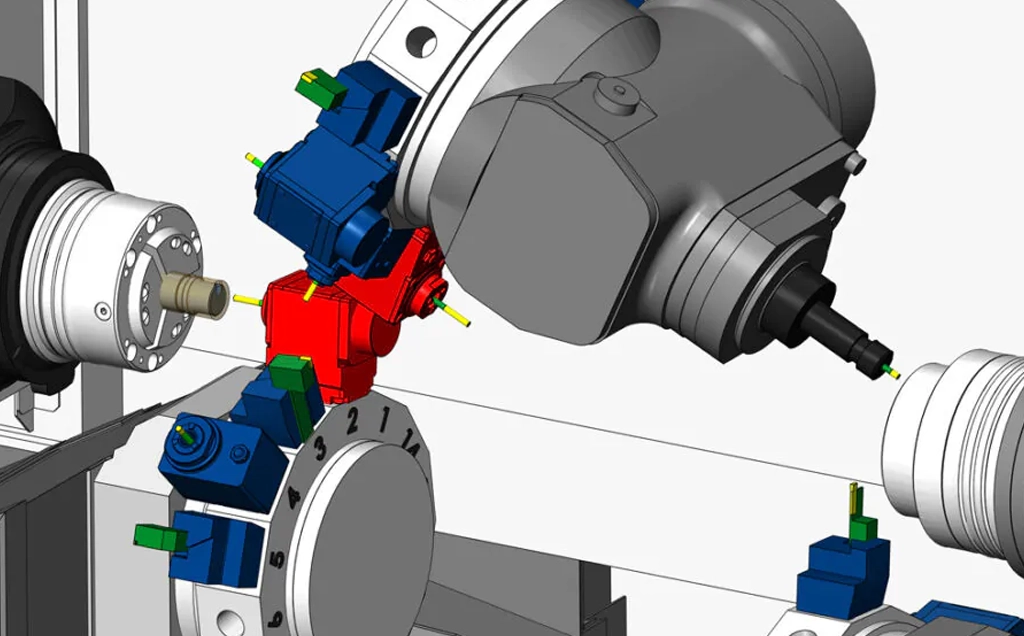
SolidCAM Mill-Turn Machining is an advanced CAM module for programming complex multi-axis mill-turn CNC centres. It goes beyond standard turning by supporting simultaneous milling and turning operations across multiple channels, turrets, and spindles – all managed within a single, integrated environment inside SOLIDWORKS or Autodesk Inventor. There is no limit on the number of axes or channels, making it suitable for the most demanding multi-tasking machines in use today.
The module is designed to handle the full complexity of modern mill-turn machines, from basic dual-turret lathes to advanced multi-spindle centres with synchronised channels. Instead of managing separate milling and turning workflows, SolidCAM brings everything together – toolpath programming, machine control operations, tool management, channel synchronisation, and machine simulation – into one cohesive system that supports maximum productivity and minimum programming error.
SolidCAM Mill-Turn supports both milling and turning operations on main and back spindles within a single CAM interface, seamlessly integrated into SOLIDWORKS or Autodesk Inventor. This eliminates the need to switch between separate modules or transfer files when programming complex multi-process parts, and gives manufacturers a single source of truth for the entire machining sequence.
The module places no limit on the number of axes or channels, making it compatible with everything from standard dual-turret lathes to the most complex multi-spindle mill-turn CNC centres available today. SolidCAM supports a wide range of machine brands and configurations, with dedicated postprocessors available for each machine.
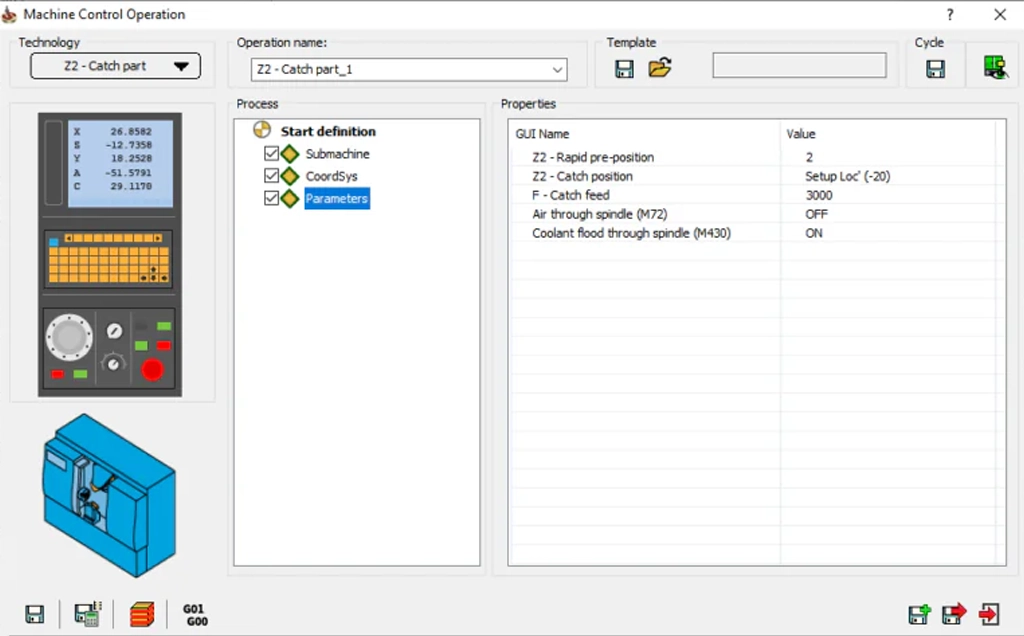
MCOs allow programmers to define machine actions that fall outside of toolpath programming – such as opening and closing chucks, activating coolants, controlling bar feeders, moving machine components, and transferring parts between spindles. Standard MCO cycles are built into mill-turn postprocessors, minimising user input for common machine actions and giving programmers tighter control over the full machining sequence.
SolidCAM’s Channel Synchronisation Manager helps organise and optimise parallel machining processes across multiple channels. It includes a clash avoidance feature that detects synchronisation conflicts before G-code generation or simulation, taking into account machine kinematics, axes sharing, and wait-mark rules. This ensures error-free output on machines where cycle time depends heavily on smart synchronisation.
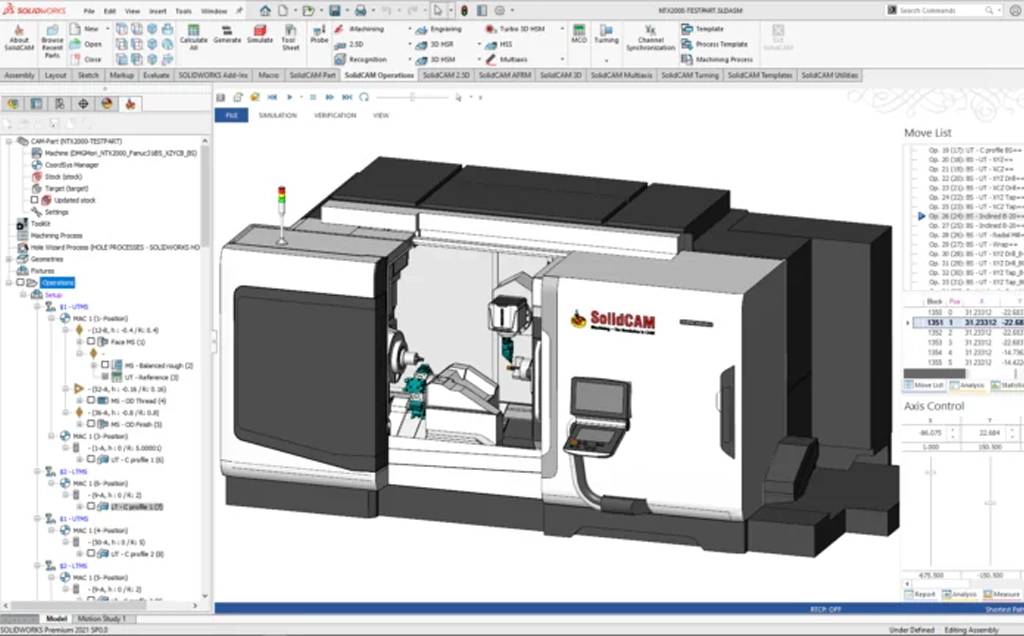
SolidCAM includes complete machine simulation for mill-turn environments, covering all machine components, tools, holders, fixtures, and workpieces. Programmers can visually prove out the entire machining process, detect collisions, estimate cycle times, and simulate part transfer and cut-off operations before any material is cut on the actual machine.
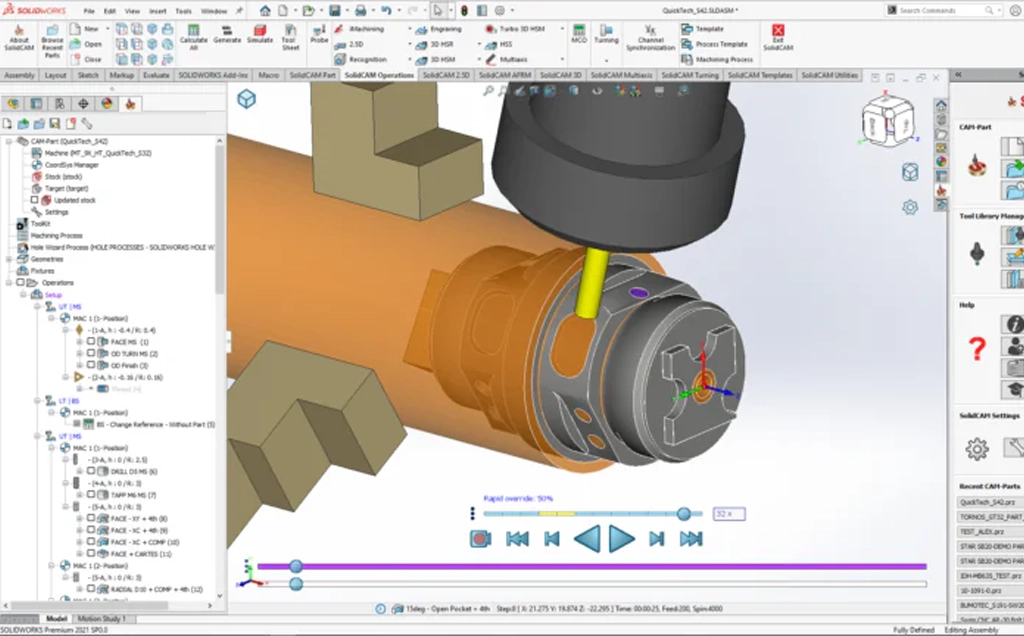
Mill-turn machines combine multiple machining processes in a single setup, which adds significant programming complexity. SolidCAM gives manufacturers the tools to manage that complexity – combining turning, milling, machine control, synchronisation, and simulation in one environment. Instead of disconnected workflows and file transfers, programmers work within a single system that keeps toolpaths, machine behaviour, and verification fully aligned.
Machine simulation, collision detection, cycle time estimation, and the Channel Synchronisation clash avoidance feature allow programmers to identify and resolve issues before committing to a cut. This is especially valuable on advanced mill-turn centres where multiple channels, spindle transfers, and synchronised operations increase the potential for costly errors and unplanned downtime.
With channel synchronisation, drive unit sharing, superimposition support, simultaneous tool use, and a comprehensive ToolKit for managing advanced mill-turn tooling, SolidCAM is designed to help manufacturers get maximum output from their multi-tasking CNC investment. By reducing cycle times and improving programming efficiency, it supports a more productive and predictable shop floor.
Find answers to common questions about SolidCAM software, CNC programming, supported machining modules and pricing in South Africa.
SolidCAM Mill-Turn Machining is used to programme complex multi-axis CNC mill-turn centres that combine milling and turning operations in a single setup. It manages the full machining sequence – from toolpath programming and machine control operations to channel synchronisation and machine simulation – all within one integrated CAM environment.
Yes. SolidCAM Mill-Turn Machining places no limit on the number of axes or channels. This makes it suitable for programming the full range of mill-turn machines, from dual-turret lathes to advanced multi-spindle centres with multiple synchronised channels.
Yes. The module is specifically designed for multi-turret and multi-spindle mill-turn configurations. It supports simultaneous operations across different channels, spindle transfer, drive unit sharing, superimposition, and sub-spindle programming – all within a single programming environment.
The Channel Synchronisation Manager is a feature within SolidCAM that helps programmers organise and optimise parallel machining processes across multiple channels. It includes a clash avoidance function that checks synchronisation logic before G-code generation, taking machine kinematics, axes sharing, and wait-mark rules into account to prevent errors on the machine.
Yes. SolidCAM includes full machine simulation for mill-turn environments, covering tools, holders, fixtures, machine components, and workpieces. Programmers can visually verify the complete machining process, detect collisions, estimate cycle times, and simulate part transfer operations before any machining takes place.
Yes. Machine Control Operations (MCOs) within SolidCAM allow programmers to define and control part transfer between the main and sub-spindle. The simulation environment also supports visual verification of the cut-off process and confirms that the transferred part is machined correctly on the sub-spindle.
If your business needs a complete solution for programming advanced multi-turret and multi-spindle mill-turn CNC centres, SolidCAM Mill-Turn Machining provides the tools to manage toolpaths, machine control, synchronisation, and simulation in one integrated environment. Speak to Simutron to request a demo, discuss your requirements, or get a quote.