

Trusted CAM software for CNC manufacturers and machine shops
SolidCAM Prismatic Parts Machining
SolidCAM Prismatic Parts Machining is designed to programme and mill 2.5D prismatic parts with multiple pockets and islands quickly and more efficiently. It uses intelligent feature recognition and advanced roughing logic to reduce manual geometry selection, improve material removal, and prepare parts more effectively for finishing. For manufacturers machining parts with flat-plane features, stepped pockets, and complex pocket layouts, it provides a faster and more structured machining workflow.
- Automatically identify geometry and depth from the 3D CAD model
- Combine roughing and rest roughing in a more efficient machining cycle
- Reduce programming time for prismatic parts with multiple pockets and islands
Trusted by manufacturers and machine shops worldwide
SolidCAM Prismatic Parts Machining
SolidCAM Prismatic Parts Machining is designed to programme and mill 2.5D prismatic parts with multiple pockets and islands quickly and more efficiently. It uses intelligent feature recognition and advanced roughing logic to reduce manual geometry selection, improve material removal, and prepare parts more effectively for finishing. For manufacturers machining parts with flat-plane features, stepped pockets, and complex pocket layouts, it provides a faster and more structured machining workflow.
- Automatically identify geometry and depth from the 3D CAD model
- Combine roughing and rest roughing in a more efficient machining cycle
- Reduce programming time for prismatic parts with multiple pockets and islands
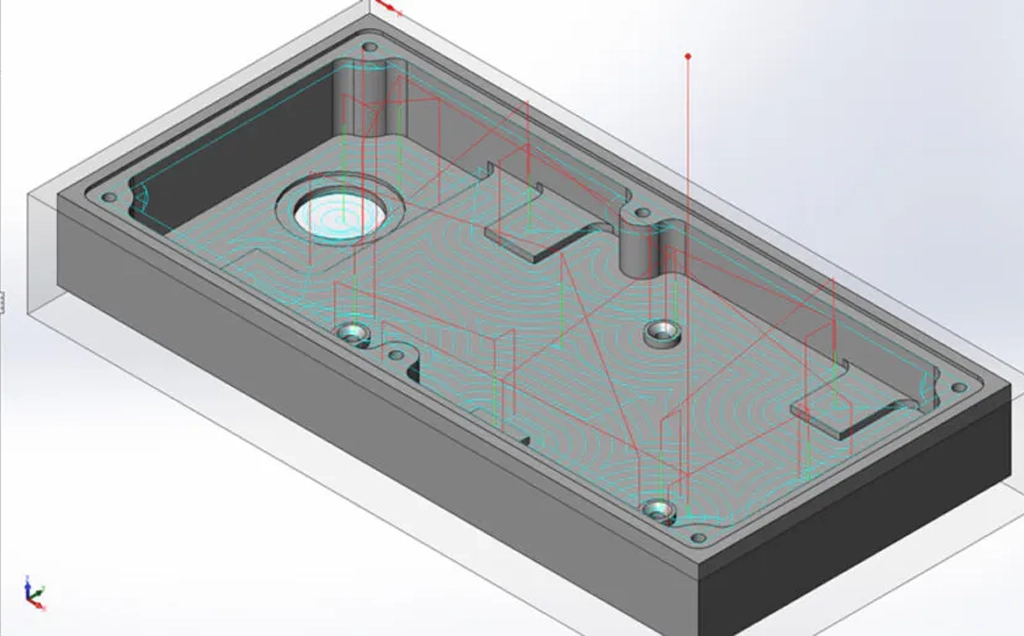
What Is SolidCAM Prismatic Parts Machining?
SolidCAM Prismatic Parts Machining is a machining solution built for milling 2.5D prismatic parts where features are located on flat planes. These parts often include multiple pockets, islands, levels, and varying depths that can become time-consuming to programme using conventional 2.5D methods. Instead of requiring manual geometry and depth definition for every feature, this module identifies key geometry directly from the 3D CAD model.
That approach helps simplify the programming process while also improving machining efficiency. By combining intelligent geometry recognition with advanced roughing and rest machining strategies, SolidCAM Prismatic Parts Machining gives manufacturers a more practical way to machine prismatic components with greater speed and control. Brackets, housings, manifold blocks, jig plates, and fixture bodies are the bread and butter of most general engineering and subcontract machine shops across South Africa – and these are exactly the types of parts where this module saves the most programming time.
Key Capabilities of SolidCAM Prismatic Parts Machining
Automatic Geometry and Depth Recognition
SolidCAM Prismatic Parts Machining reduces manual setup by automatically identifying feature geometry and depth directly from the 3D CAD model. This removes much of the time normally spent defining chains, levels, and feature boundaries one by one, which is especially valuable on parts with many pockets and islands.
Intelligent Roughing and Rest Roughing
The module combines roughing and rest roughing in a more efficient machining approach. This helps the software remove the main stock first, then focus on the remaining tight areas and corners with smaller tools as needed. The result is a cleaner machining sequence that is better aligned to the actual stock left behind. SolidCAM states that with smaller tools, any number of rest machining operations can be performed – taking into account the updated stock model, only the tight areas and corners will be machined.
Scallop-Driven Step-Up Technology
SolidCAM uses intelligent step-up technology with constant scallop height to prepare the part more effectively for finishing during the roughing cycle. This helps improve semi-finishing readiness while keeping the roughing process productive and controlled.
Intelligent Toolpath Sorting and Localised Machining
The module applies intelligent sorting to group nearby cuts more effectively and reduce non-cutting moves. By linking 2D Z-level regions more intelligently and focusing on localised machining areas, it reduces long repositioning moves and keeps the toolpath more efficient across the part. SolidCAM states that it uses the deepest step-downs first to remove the most material, maximising Material Removal Rate and tool life while eliminating the need for full retracts.
Pocket Recognition for Finishing
Pocket recognition automatically identifies pockets at different levels and depths, then performs finishing in a single operation using a contour-based pattern. This significantly reduces programming effort and helps streamline finishing preparation on prismatic parts with multiple pocket features.
Benefits of SolidCAM Prismatic Parts Machining
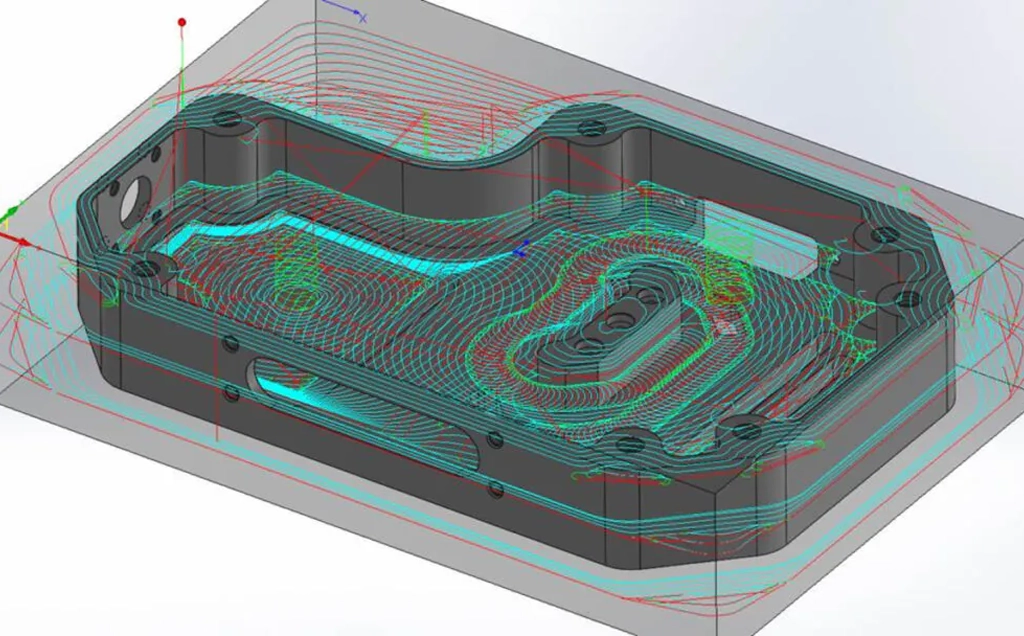
Reduce Programming Time
One of the biggest benefits of this module is the reduction in programming effort. Automatic feature recognition and depth identification remove a large amount of repetitive manual setup, helping programmers move from model to machining strategy more quickly. In high-mix subcontract environments – which make up a large part of the South African machining sector – the ability to programme prismatic parts faster has a direct effect on quoting turnaround and shop throughput.
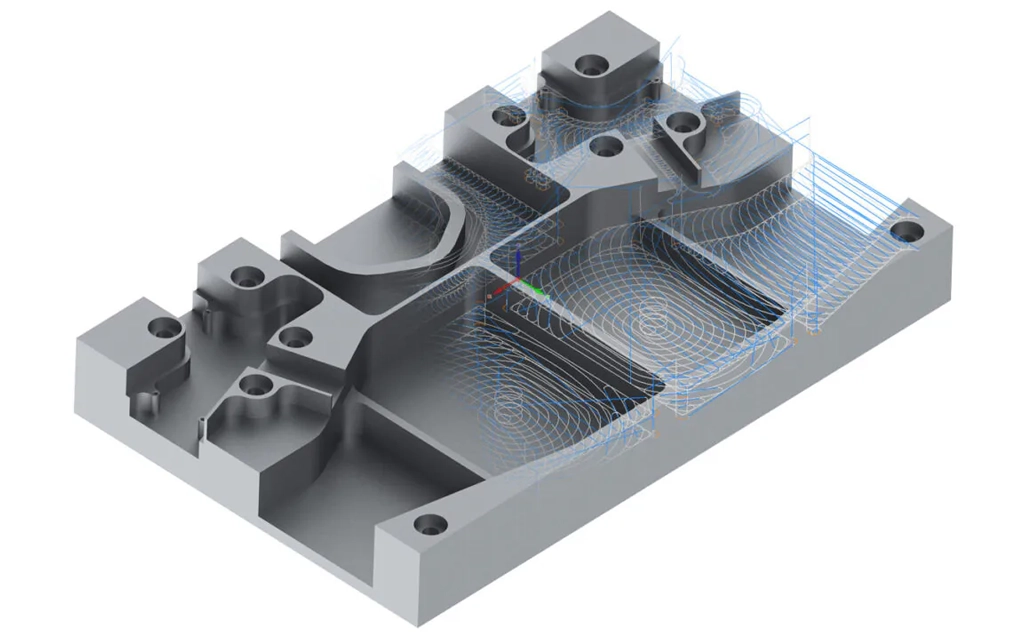
Improve Machining Efficiency
By using deep step-downs first, intelligently grouping cuts, and reducing retracts and long positioning moves, the module is designed to improve overall machining performance. This supports shorter cycle times and better use of machine movement during prismatic part machining. SolidCAM states that smart positioning between 2D Z-level regions and 3D Z-level linking reduce long position moves through localised machining of 2D toolpath regions.
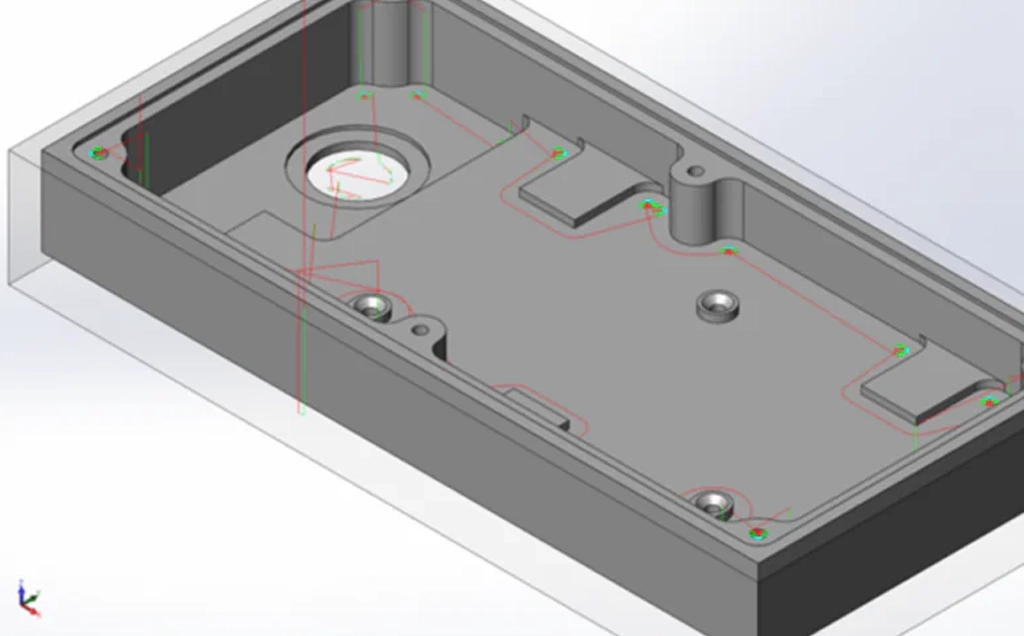
Machine Tight Areas More Effectively
Rest machining logic allows smaller tools to focus only on the areas that still need attention. That means tight corners and confined spaces can be machined more precisely without re-cutting material that has already been cleared by larger tools. SolidCAM also provides automatic target model protection so that large tools can safely be used in confined spaces, and holder collision protection adjusts the toolpath to avoid contact between the tool holder and the updated stock model at every stage of the operation. By using a shorter tool extension from the holder, the shorter and stronger tool can be run faster and more aggressively.
Frequently asked questions
Find answers to common questions about SolidCAM software, CNC programming, supported machining modules and pricing in South Africa.
SolidCAM Prismatic Parts Machining is used to programme and mill 2.5D prismatic parts with multiple pockets, islands, and flat-plane features more efficiently.
Yes. It automatically identifies geometry and depth directly from the 3D CAD model, which reduces the need for manual chain and level definition. SolidCAM states that standard 2.5D CAM programming requires users to select or define geometry for each feature, resulting in several operations – this module eliminates that need.
Yes. The module supports rest machining so that smaller tools can focus only on the remaining tight areas and corners left after larger tools have removed the main stock.
Yes. It is specifically suited to prismatic parts with multiple pockets, islands, and varying depths, where conventional 2.5D programming can become time-consuming.
Yes. Its step-up strategy and pocket recognition features help prepare the part more effectively for finishing while also simplifying finishing operations. SolidCAM states that pocket recognition automatically identifies all pockets at different depths and levels and performs a finish cut in a single operation, dramatically reducing programming time.
Yes. By improving cut sorting, reducing non-cutting moves, and applying more efficient material removal logic, it is designed to support shorter machining cycles.
SolidCAM Prismatic Parts Machining is part of the iMachining 3D module. In South Africa, it is available through Simutron – contact the team to discuss whether iMachining 3D suits your part types and production requirements, or to arrange a demo on your own components.
See SolidCAM Prismatic Parts Machining in Action
If your business machines prismatic parts with multiple pockets, islands, and varying depths, SolidCAM Prismatic Parts Machining provides a more efficient way to programme, rough, rest machine, and prepare parts for finishing. Speak to Simutron to request a demo, discuss your machining requirements, or get a quote.